
Build a Training Log You Will Actually Use
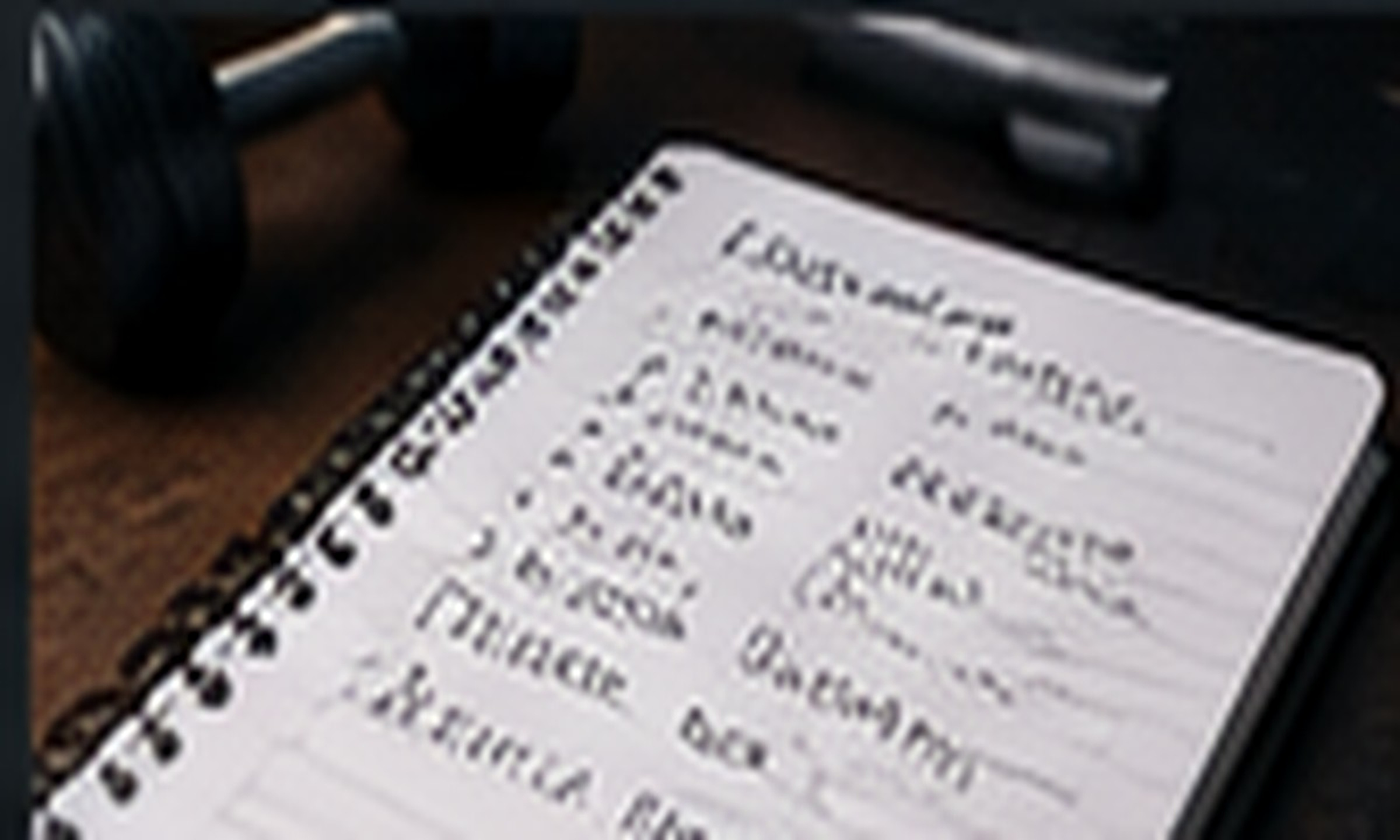
A training log is most useful when you can keep using it. You do not need a spreadsheet with twenty columns. Kivamove recommends a short record that captures the information needed to understand what happened and what you want to repeat.
Start with four fields: date, exercise, work completed, and a short note. Work completed can include sets, repetitions, duration, distance or resistance depending on the movement.
Record before you forget
Write the information soon after the session. For strength work, record the exercise and the number of sets and repetitions. For conditioning, note the activity and the interval structure. For mobility, list the sequence or the movements you used.
The note can be as simple as “movement felt clear” or “reduce range next time.” The purpose is to preserve a useful observation, not produce a diary entry.
Use consistent names
Choose one name for each exercise and keep it stable. If you switch between three different labels for the same movement, the log becomes harder to scan.
Use a simple structure such as “goblet squat,” “wall push-up,” “band row,” or “brisk walk intervals” only when those names actually match what you did. Accuracy is more useful than fancy terminology.
Track progression without guessing
When you change one variable, write down what changed. Example: the same exercise and number of sets, but one additional repetition per set. Or the same repetitions with a small increase in resistance.
Because the old entry stays visible, you can compare sessions without relying on memory. That makes it easier to decide whether the next change should be small, repeated, or postponed.
Log mobility too
Mobility sessions are often ignored in training notes because they do not have a weight number. Still, you can record the movements and how much time you spent. Note whether you used a chair, wall or floor and whether a particular range felt comfortable.
Do not turn subjective notes into medical conclusions. “Left side felt more restricted today” is a useful observation. “This movement fixed a problem” would require evidence that a simple log cannot provide.
Review weekly
Once a week, spend five minutes scanning the log. Look for repetition, not perfection. Which exercises appeared several times? Which sessions were difficult to organize? Which movements were consistently easy to understand?
Use the answers to make the next week simpler. Keep useful movements. Adjust one variable. Remove unnecessary complexity.
Keep privacy in mind
A training log can contain personal information. Store it where you are comfortable keeping it and avoid putting sensitive information into public forms or public posts.
Training should also stay flexible. Missing an entry is not a reason to invent a number later. Leave it blank and continue with the next session.
A good log is not a performance report. It is a memory aid and planning tool. Four small fields can be enough to create continuity: when you trained, what you did, how much you did, and one useful note for next time.
Keep a minimum version for busy days
On a full day, the log can be reduced to three lines: what you trained, the amount you completed, and one note for the next session. You do not have to reconstruct every detail after the fact. A small accurate record is more useful than an elaborate entry that never gets finished.
For repeated strength work, write the same exercise name every time. For conditioning, keep the interval format visible. For mobility, list the movements or the sequence. Those repeated labels make the history easier to scan later.
At the end of the month, you can look for patterns without assigning a grade. You might notice that a certain exercise appears regularly or that some sessions are difficult to schedule. Those observations can guide the next block without requiring a complicated tracking system.
Record decisions, not just numbers
The most useful line in a log can sometimes be the decision you made. Write “kept same load because technique was clear” or “reduced range for control” when that is what happened. Those notes explain the numbers instead of leaving you to guess later.
A log can also show where complexity is creeping in. If an exercise keeps being rewritten with different names or several variables change at once, simplify the next entry. A clean record makes the next session easier to start.